
"fruit beans"
40000 article(s) found
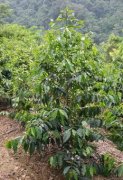
The planting process of coffee trees, coffee flowers, coffee fruits and coffee beans
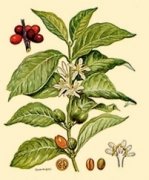
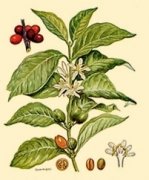
The coffee tree is an evergreen tree with small white flowers and green fruit that does not turn red until it is ripe. A normal coffee tree can usually grow to a height of 5 to 10 meters, but bean farmers often prune it to less than 2 meters for harvest convenience. After flowering, there are many dark green oval fruits, and the mature fruits change from dark green to bright red, due to the color and cherry.

Washed beans-Highland Honduras Coffee beans San Juan Xido producing area
High-quality coffee in Honduras uses water washing to deal with coffee beans, usually after soaking, when the defective fruit will surface, it can be discarded first. Then put the good fruit into the fruit peeling machine and peel off the peel with the rotating force of the machine. Peeled fruits are screened by machines to select fruits of high quality. Usually the bigger the fruit.

Introduction to the characteristics of Coffee varieties in Santa Barara Manor, Honduras
The granules of coffee beans in Honduras are large in shape, uniform in size and glossy in color. In order to facilitate harvesting, farmers will prune the coffee trees to no more than 150 centimeters, because if they grow too high, they have to set up ladders to pick, which is not only time-consuming, but also may damage the trees by bending branches. As the ripening period of each fruit of the coffee bean is different, it is necessary to keep the coffee bean in good condition.

Nicaragua Orange Fruit Manor's unique Special treatment steps-introduction to Water-free Solar treatment
For the exchange of professional baristas, please follow the coffee workshop (Wechat official account cafe_style) El Naranjo Dipilto. Nicaraguan Orange Fruit Manor (Best of Nicaragua winning Manor | Award record: 2016. 1st) Variety: Maragogype producing area: Nueva Segovia (New Sagovia) area: Dipilto Grade: Strictly Hard Beans

Classification and causes of coffee defective beans all black beans SCAA grade worm-eaten beans
Boutique coffee is fresh coffee. Whether it's food or drink, of course, the fresh the better, and so is boutique coffee. High-quality coffee should keep the coffee beans fresh before making, including the preservation of baked beans, and grind the coffee beans into powder before making, which is also to retain its original and best flavor. And the way of making hand-made coffee is such a way to make high-quality coffee.
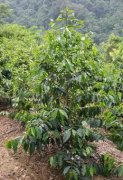
Basic knowledge of boutique coffee about coffee trees, coffee flowers, coffee fruits
The coffee tree is an evergreen tree with small white flowers and green fruit that does not turn red until it is ripe. A normal coffee tree can usually grow to a height of 5 to 10 meters, but bean farmers often prune it to less than 2 meters for harvest convenience. After flowering, there are many dark green oval fruits, and the mature fruits change from dark green to bright red, due to the color and cherry.

Classification and causes of defective beans in Fine Coffee SCAA
The growth environment of boutique coffee beans also has higher requirements. Generally grow at an altitude of 1500 meters or even more than 2000 meters above sea level, with appropriate precipitation, sunshine, temperature and soil conditions. Some world-famous coffee beans also have a special geographical environment, such as the alpine clouds in the Blue Mountains, the free shade provided by the afternoon clouds in Kona, and the volcanic ash soil in Antigua.
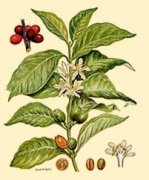
Coffee beans Coffee
There are about 60 species of coffee in the world, of which only 25 species are cultivated to make coffee, of which only 4 species are used as commercial coffee: large fruit coffee (Coffea liberica), medium fruit coffee (Coffea canephora), small fruit coffee (Coffea arabica) and high yield coffee (Coffea dewevrei). These are botanical names. Coffee in the world at present

What does the coffee fruit look like? What do coffee beans look like? What is it made of?
Professional coffee knowledge exchange more coffee bean information please follow the coffee workshop (Wechat official account cafe_style coffee fruit like cherry coffee fruit, to we buy home grinding coffee beans, in fact, after several procedures to achieve the delicacy. And how the little guy becomes raw beans, let's take a look at layers of exploitation and peeling off the coffee fruit. Generally speaking, raw coffee

The processing method of high-quality coffee beans how to turn coffee fruits into coffee beans?
There are a pair of oval seeds in the center of the fruit of the coffee tree, which are covered with exocarp, endocarp and pulp. Ripe fruit will rot in a short period of time without treatment, so the purpose of refining is to enable coffee beans to be preserved for a long time, easy to store and circulate. Figure (1) Coffee fruit Coffee fresh fruit should be dealt with immediately after being harvested. Refining is to remove the peel and pulp of coffee fruit
Description of Taste and Flavor of Yejia Coffee introduction to the treatment method of Grinding scale Variety production area
Description of taste and flavor of Yejia Coffee Coffee description Grinding scale Variety production area treatment method Solar Yega Coffee sets a strict standard for collecting red fruits (as a result of coffee trees). Before exposing the coffee fruit, the unripe green fruit or defective fruit is removed manually, and the damaged or moldy fruit is removed during the sun drying process. after two weeks, the sugar and essence are all infiltrated into the coffee bean, and the water content is reduced to 12%.

Coffee Bean planting process-Coffee Bean growing region of Latin America
The planting process of coffee beans-the growing area of coffee beans in Latin America enters the peak period about 1-2 years after the first production period. Coffee trees generally bloom in 3-4 years, about 2-3 months a year, and their appearance and smell are similar to those of jasmine. the flowering period is 3-5 days. After the flowers bloom, they bear small green fruits, which ripen and turn red into ripe fruits that can be picked after a few months. Mature

The birth of coffee beans (1)
Coffee trees take 3-5 years from planting to fruiting. 6-10 Coffee trees bear fruit most easily in 15-20 years, which is the harvest period. Coffee trees are usually bred in nurseries, grown into saplings, and then moved to coffee plantations a year later, following exactly the same methods used by Arabs to grow coffee trees. For the first four or five years of its life, coffee trees take root downwards and grow upwards.
From fruit to green coffee beans
A coffee tree can harvest 3-5 kg of fruit, and raw coffee beans account for 1/5 of the fruit mass. Going from fruit to green coffee beans is indeed a time-consuming and laborious task.

Flavor characteristics of moderate and Deep roasting of Honduran Coffee beans introduction to Grinding and Calibration treatment of varieties
The flavor characteristics of moderate and deep roasting of Honduran coffee beans the grinding scale treatment method introduces that Honduras is not well-known in the consumer market because it does not have strong support in the handling and transportation of raw beans. However, in recent years, the country has begun to change dramatically, and the emphasis on the coffee industry has slowly opened up the international popularity of coffee from Honduras. Honduras
A family of coffee beans
There are about 60 species of coffee in the world, of which only 25 species are cultivated to make coffee, of which only 4 species are used as commercial coffee: large fruit coffee (Coffea liberica), medium fruit coffee (Coffea canephora), small fruit coffee (Coffea arabica) and high yield coffee (Coffea dewevrei). These are botanical names. Coffee in the world at present
A family of coffee beans
There are about 60 species of coffee in the world, of which only 25 species are cultivated to make coffee, of which only 4 species are used as commercial coffee: large fruit coffee (Coffea liberica), medium fruit coffee (Coffea canephora), small fruit coffee (Coffea arabica) and high yield coffee (Coffea dewevrei). These are botanical names. Coffee in the world at present
The evolution of coffee from fruit to raw beans to understand the change process of coffee beans
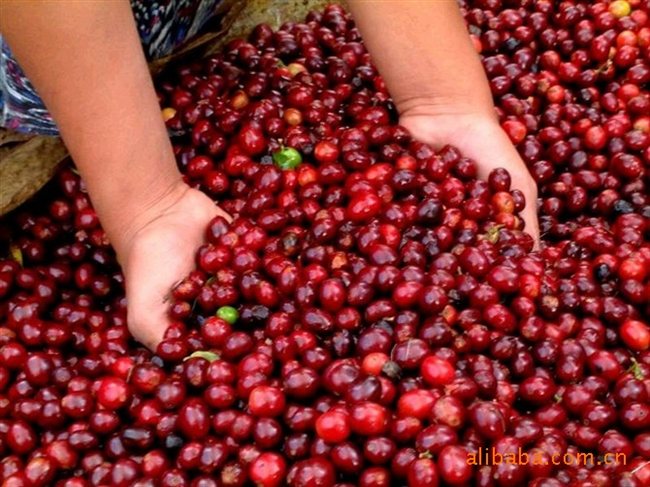
In the middle of the fruit of coffee is a pair of oval seeds, which are covered with outer skin, inner pulp and pulp. Ripe fruit spoils in a short time without treatment. Refining is to remove the skin and pulp of the coffee fruit, and then take out the seeds. Generally speaking, about 1 kg of raw coffee beans can be obtained from 5 kg of coffee fruit. The refining methods include drying type, washing type, and compromise between the two.

What kind of fruit decomposition diagram is the fruit of coffee?
What is the type of fruit of coffee? structure map Robasta Coffee Tree originates in Madagascar in central and western Africa and Indonesia in Asia, accounting for about 20% and 30% of the world's output. Robasta coffee tree is suitable for planting in the lowlands below 500 meters above sea level. It has strong adaptability to the environment, can resist bad climate and resist diseases and insect pests.

A brief introduction to the planting market price of Xido boutique coffee beans in San Juan, Honduras.
High-quality coffee in Honduras uses water washing to deal with coffee beans, usually after soaking, when the defective fruit will surface, it can be discarded first. Then put the good fruit into the fruit peeling machine and peel off the peel with the rotating force of the machine. Peeled fruits are screened by machines to select fruits of high quality. Usually the bigger.